Language Resources for Visitors

Simple English–Thai resources to help SHALOM visitors greet, listen and communicate respectfully during home visits.

SHALOM Home Visit English–Thai

Practice useful phrases for arriving at a family home, asking how everyone is doing, listening well, offering prayer and saying goodbye.

Open the Home Visit Role-Play →

SHALOM Home Visit Role-Play

Visiting a Person with a Disability and Their Family

How to use this guide: Read the English first, then the Thai. “Say it” gives a simple English-letter pronunciation. Male speaker: ครับ (krap). Female speaker: ค่ะ/คะ (ka).
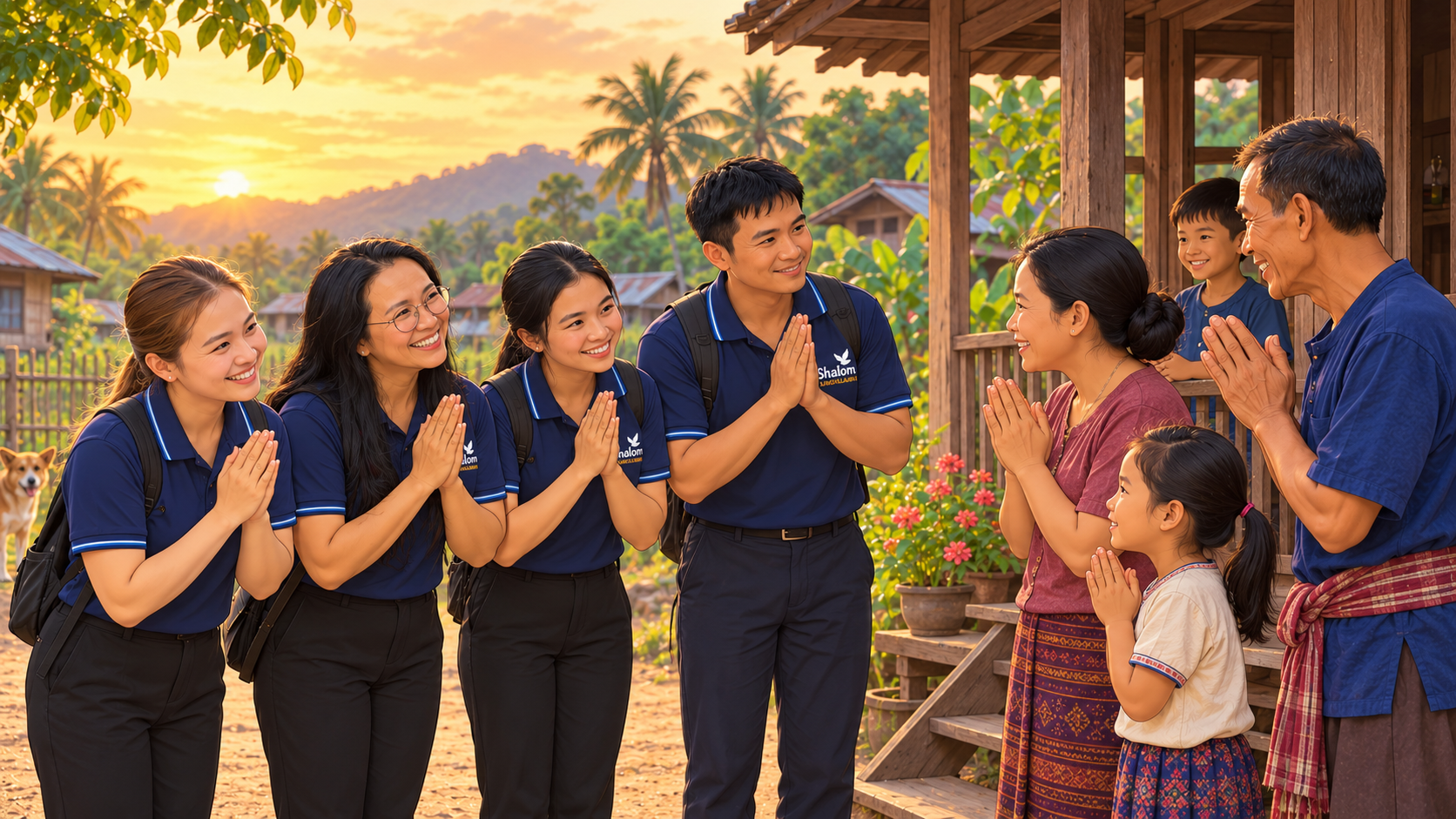
SHALOM team greeting a village family with a respectful wai

Arrive as guests: warm, respectful and ready to listen.

1. Arriving at the Home

Hello!
สวัสดีครับ/ค่ะ
Say it: sa-wat-dee krap/ka
We are visiting from SHALOM Foundation.
พวกเรามาเยี่ยมจากมูลนิธิ SHALOM ครับ/ค่ะ
Say it: puak rao ma yiam jak moon-la-ni-ti Sha-lom krap/ka
We’re very happy to see you today.
พวกเราดีใจมากที่ได้มาเจอทุกคนวันนี้ครับ/ค่ะ
Say it: puak rao dee-jai mak tee dai ma jer took kon wan-nee krap/ka

2. Greeting the Person and Family

How are you doing today?
วันนี้เป็นอย่างไรบ้างครับ/คะ
Say it: wan-nee pen yang-rai bang krap/ka?
I’m doing well, thank you.
สบายดีครับ/ค่ะ ขอบคุณครับ/ค่ะ
Say it: sa-bai-dee krap/ka, kop-khun krap/ka

3. Have You Eaten Yet?

Have you eaten yet?
กินข้าวแล้วหรือยังครับ/คะ
Say it: gin khao laeo reu yang krap/ka?
Yes, we have. Thank you.
กินแล้วครับ/ค่ะ ขอบคุณครับ/ค่ะ
Say it: gin laeo krap/ka, kop-khun krap/ka
In Thailand, “Have you eaten?” is often a caring everyday greeting.

4. Asking About the Family

How are things with your family lately?
ช่วงนี้คนในครอบครัวเป็นอย่างไรกันบ้างครับ/คะ
Say it: chuang-nee kon nai krop-krua pen yang-rai gan bang krap/ka?
Everyone is doing well, thanks.
ทุกคนสบายดีครับ/ค่ะ ขอบคุณครับ/ค่ะ
Say it: took kon sa-bai-dee krap/ka, kop-khun krap/ka

5. Showing Interest and Listening

How have things been for you lately?
ช่วงนี้เป็นอย่างไรบ้างครับ/คะ
Say it: chuang-nee pen yang-rai bang krap/ka?
Is everything going okay at home?
ที่บ้านช่วงนี้ทุกอย่างเรียบร้อยดีไหมครับ/คะ
Say it: tee ban chuang-nee took-yang riap-roi dee mai krap/ka?
Is there anything you would like to tell us?
มีอะไรที่อยากเล่าให้พวกเราฟังไหมครับ/คะ
Say it: mee a-rai tee yak lao hai puak-rao fang mai krap/ka?
Can I help you?
ให้ช่วยไหมครับ/คะ
Say it: hai chuay mai krap/ka?

6. Encouraging the Family

We’re very happy we could visit you.
พวกเราดีใจมากที่ได้มาเยี่ยมครับ/ค่ะ
Say it: puak-rao dee-jai mak tee dai ma yiam krap/ka
Thank you for spending time with us.
ขอบคุณที่ใช้เวลากับพวกเรานะครับ/คะ
Say it: kop-khun tee chai way-la gap puak-rao na krap/ka

7. Offering Prayer

May we pray for you and your family?
พวกเราขออธิษฐานเผื่อคุณและครอบครัวได้ไหมครับ/คะ
Say it: puak-rao kor a-ti-than puea khun lae krop-krua dai mai krap/ka?
Is there anything you would like us to pray for?
มีเรื่องอะไรที่อยากให้พวกเราอธิษฐานเผื่อเป็นพิเศษไหมครับ/คะ
Say it: mee rueang a-rai tee yak hai puak-rao a-ti-than puea pen pi-set mai krap/ka?

8. Preparing to Leave

Thank you so much for coming today.
ขอบคุณมากนะครับ/คะที่มาเยี่ยมวันนี้
Say it: kop-khun mak na krap/ka tee ma yiam wan-nee
Thank you for having me. I had a wonderful time.
ขอบคุณมากครับ/ค่ะที่ต้อนรับผม/ฉัน วันนี้ผม/ฉันมีความสุขมากครับ/ค่ะ
Say it: kop-khun mak krap/ka tee ton-rap pom/chan, wan-nee pom/chan mee kwam-sook mak krap/ka

9. Saying Goodbye

Get home safe. Visit us again soon!
เดินทางกลับโดยสวัสดิภาพนะครับ/คะ มาเยี่ยมกันอีกเร็ว ๆ นี้นะครับ/คะ
Say it: dern-tang glap doi sa-wat-di-pap na krap/ka, ma yiam gan eek reo-reo nee na krap/ka
See you again soon!
แล้วพบกันใหม่นะครับ/คะ
Say it: laeo pop gan mai na krap/ka
God bless you!
ขอพระเจ้าอวยพรครับ/ค่ะ
Say it: kor pra-jao uay-pon krap/ka

10. Christmas Greeting

Blessed Christmas!
ขอพระพรในวันคริสต์มาสครับ/ค่ะ
Say it: kor pra-pon nai wan Christmas krap/ka

11. Easter Greeting

Blessed Easter!
ขอพระพรในวันอีสเตอร์ครับ/ค่ะ
Say it: kor pra-pon nai wan Easter krap/ka

Short Practice Dialogue

Visitor: Hello! We are visiting from SHALOM Foundation.
สวัสดีครับ/ค่ะ พวกเรามาเยี่ยมจากมูลนิธิ SHALOM ครับ/ค่ะ

Visitor: How are you doing today? Have you eaten yet?
วันนี้เป็นอย่างไรบ้างครับ/คะ กินข้าวแล้วหรือยังครับ/คะ

Visitor: How are things with your family lately?
ช่วงนี้คนในครอบครัวเป็นอย่างไรกันบ้างครับ/คะ

Family: Everyone is doing well, thanks.
ทุกคนสบายดีครับ/ค่ะ ขอบคุณครับ/ค่ะ

Visitor: May we pray for you and your family?
พวกเราขออธิษฐานเผื่อคุณและครอบครัวได้ไหมครับ/คะ

Visitor: God bless you. See you again soon!
ขอพระเจ้าอวยพรครับ/ค่ะ แล้วพบกันใหม่นะครับ/คะ

Simple Cultural Reminders

top of page

Language: Thai

ดาราประกายแจ่มฟ้า

Stars Shine Brightly in the Sky

1. ดาราประกายแจ่มฟ้า
Pronunciation: dah-rah bpra-gai jaem fah
English meaning: Stars shine brightly in the sky.
Meaning notes: ดารา = stars; ประกาย = sparkling light; แจ่มฟ้า = bright in the sky.

2. เป็นสัญญาแน่นอน
Pronunciation: bpen san-yah naen-nawn
English meaning: A sure and certain sign.
Meaning notes: The shining stars are presented as a sign of the birth being celebrated.

3. ทูตสวรรค์ร้องอวยพร
Pronunciation: thoot sa-wan rawng ooay-pawn
English meaning: Angels sing their blessings.
Meaning notes: ทูตสวรรค์ = angels; ร้อง = sing; อวยพร = bless or offer blessings.

4. ประชากรเอยจงยินดี
Pronunciation: bpra-chah-gawn er-y jong yin-dee
English meaning: O people, rejoice!
Meaning notes: ประชากร = people; เอย is a poetic form of address; จงยินดี = rejoice.

5. กุมารน้อยประสูติแล้ว
Pronunciation: goo-mahn noy bpra-soot laew
English meaning: The little Child is born.
Meaning notes: กุมารน้อย = little child; ประสูติ is an elevated word for being born. In this Christmas song, the Child is Jesus.

6. งามเพริศแพร้วไร้ราคี
Pronunciation: ngahm prert-praew rai rah-khee
English meaning: Radiant in beauty, pure and spotless.
Meaning notes: งามเพริศแพร้ว describes radiant beauty; ไร้ราคี means without stain or blemish.

7. เชิญประทับในชีวี
Pronunciation: chern bpra-thap nai chee-wee
English meaning: Come and dwell within my life.
Meaning notes: เชิญ is an invitation; ประทับ is a respectful word for dwelling or staying; ชีวี is a poetic word for life.

8. เพื่อข้านี้พ้นบาปเอย
Pronunciation: phuea khah nee phon bahp er-y
English meaning: So that I may be freed from sin.
Meaning notes: ข้า is a humble or poetic I; พ้นบาป means to be delivered from sin; เอย closes the line poetically.

Easy pronunciation guide
These English-letter spellings are approximate singing aids, not a full guide to Thai tones. Hyphens separate syllables. Listen to the singer for vowel length and tone.
ah = a as in father; ee = as in see; oo = as in food; ai = as in eye; aw = as in saw. bp is a soft unaspirated p, close to the sound between English b and p. th is an airy t, as in top, never th as in think. ph is an airy p, never f. kh is an airy k. er-y approximates the Thai poetic ending เอย; phuea contains a Thai vowel without a close English equivalent.
The eight lyric lines are repeated twice in the video. English lines translate the meaning and are not a rhyming English version.


bottom of page