SHALOM Home Visit Role-Play
Visiting a Person with a Disability and Their Family
How to use this guide: Read the English first, then the Thai. “Say it” gives a simple English-letter pronunciation. Male speaker: ครับ (krap). Female speaker: ค่ะ/คะ (ka).
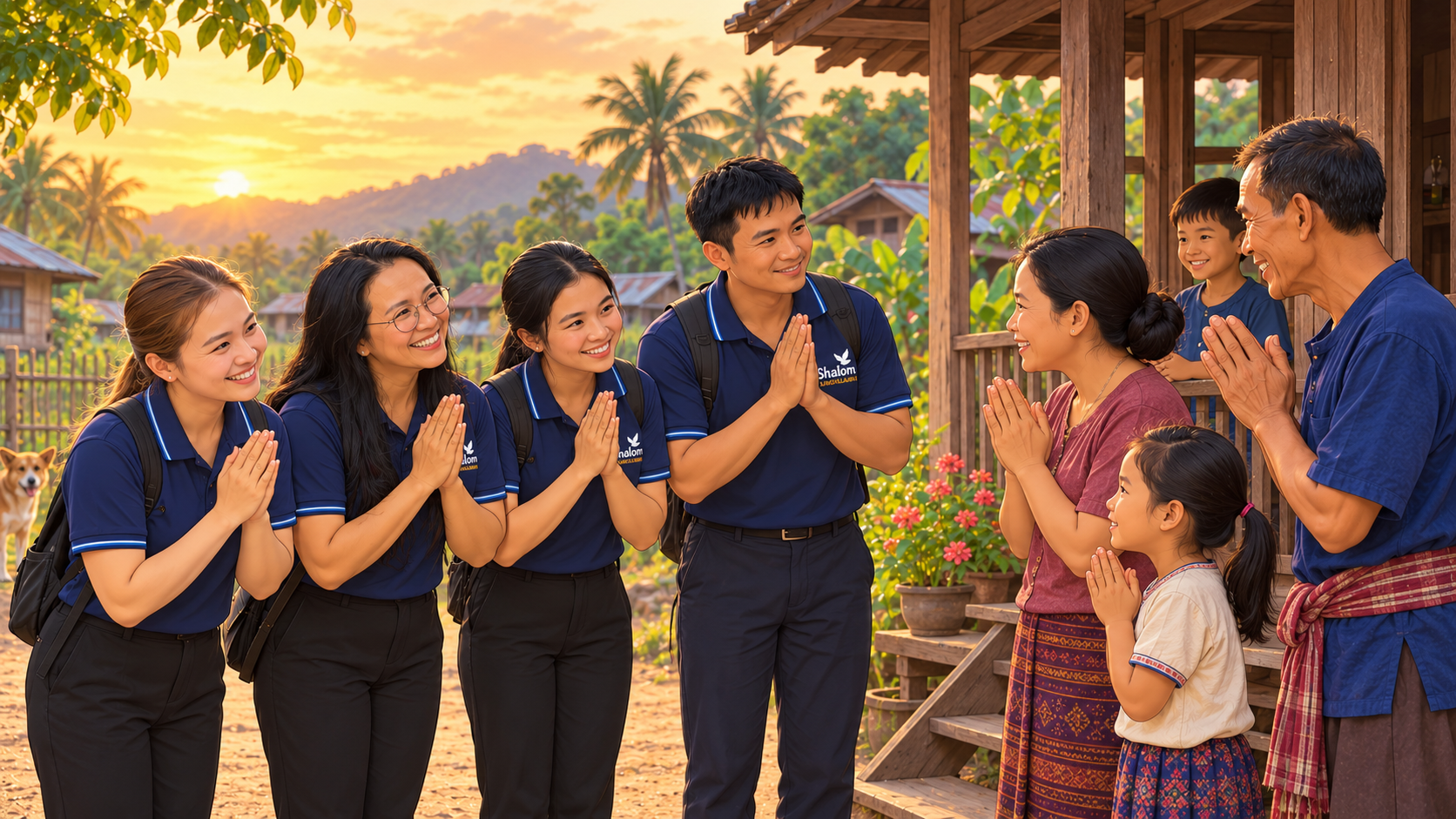
Arrive as guests: warm, respectful and ready to listen.
1. Arriving at the Home
Hello!
สวัสดีครับ/ค่ะ
Say it: sa-wat-dee krap/ka
We are visiting from SHALOM Foundation.
พวกเรามาเยี่ยมจากมูลนิธิ SHALOM ครับ/ค่ะ
Say it: puak rao ma yiam jak moon-la-ni-ti Sha-lom krap/ka
We’re very happy to see you today.
พวกเราดีใจมากที่ได้มาเจอทุกคนวันนี้ครับ/ค่ะ
Say it: puak rao dee-jai mak tee dai ma jer took kon wan-nee krap/ka
2. Greeting the Person and Family
How are you doing today?
วันนี้เป็นอย่างไรบ้างครับ/คะ
Say it: wan-nee pen yang-rai bang krap/ka?
I’m doing well, thank you.
สบายดีครับ/ค่ะ ขอบคุณครับ/ค่ะ
Say it: sa-bai-dee krap/ka, kop-khun krap/ka
3. Have You Eaten Yet?
Have you eaten yet?
กินข้าวแล้วหรือยังครับ/คะ
Say it: gin khao laeo reu yang krap/ka?
Yes, we have. Thank you.
กินแล้วครับ/ค่ะ ขอบคุณครับ/ค่ะ
Say it: gin laeo krap/ka, kop-khun krap/ka
In Thailand, “Have you eaten?” is often a caring everyday greeting.
4. Asking About the Family
How are things with your family lately?
ช่วงนี้คนในครอบครัวเป็นอย่างไรกันบ้างครับ/คะ
Say it: chuang-nee kon nai krop-krua pen yang-rai gan bang krap/ka?
Everyone is doing well, thanks.
ทุกคนสบายดีครับ/ค่ะ ขอบคุณครับ/ค่ะ
Say it: took kon sa-bai-dee krap/ka, kop-khun krap/ka
5. Showing Interest and Listening
How have things been for you lately?
ช่วงนี้เป็นอย่างไรบ้างครับ/คะ
Say it: chuang-nee pen yang-rai bang krap/ka?
Is everything going okay at home?
ที่บ้านช่วงนี้ทุกอย่างเรียบร้อยดีไหมครับ/คะ
Say it: tee ban chuang-nee took-yang riap-roi dee mai krap/ka?
Is there anything you would like to tell us?
มีอะไรที่อยากเล่าให้พวกเราฟังไหมครับ/คะ
Say it: mee a-rai tee yak lao hai puak-rao fang mai krap/ka?
Can I help you?
ให้ช่วยไหมครับ/คะ
Say it: hai chuay mai krap/ka?
6. Encouraging the Family
We’re very happy we could visit you.
พวกเราดีใจมากที่ได้มาเยี่ยมครับ/ค่ะ
Say it: puak-rao dee-jai mak tee dai ma yiam krap/ka
Thank you for spending time with us.
ขอบคุณที่ใช้เวลากับพวกเรานะครับ/คะ
Say it: kop-khun tee chai way-la gap puak-rao na krap/ka
7. Offering Prayer
May we pray for you and your family?
พวกเราขออธิษฐานเผื่อคุณและครอบครัวได้ไหมครับ/คะ
Say it: puak-rao kor a-ti-than puea khun lae krop-krua dai mai krap/ka?
Is there anything you would like us to pray for?
มีเรื่องอะไรที่อยากให้พวกเราอธิษฐานเผื่อเป็นพิเศษไหมครับ/คะ
Say it: mee rueang a-rai tee yak hai puak-rao a-ti-than puea pen pi-set mai krap/ka?
8. Preparing to Leave
Thank you so much for coming today.
ขอบคุณมากนะครับ/คะที่มาเยี่ยมวันนี้
Say it: kop-khun mak na krap/ka tee ma yiam wan-nee
Thank you for having me. I had a wonderful time.
ขอบคุณมากครับ/ค่ะที่ต้อนรับผม/ฉัน วันนี้ผม/ฉันมีความสุขมากครับ/ค่ะ
Say it: kop-khun mak krap/ka tee ton-rap pom/chan, wan-nee pom/chan mee kwam-sook mak krap/ka
9. Saying Goodbye
Get home safe. Visit us again soon!
เดินทางกลับโดยสวัสดิภาพนะครับ/คะ มาเยี่ยมกันอีกเร็ว ๆ นี้นะครับ/คะ
Say it: dern-tang glap doi sa-wat-di-pap na krap/ka, ma yiam gan eek reo-reo nee na krap/ka
See you again soon!
แล้วพบกันใหม่นะครับ/คะ
Say it: laeo pop gan mai na krap/ka
God bless you!
ขอพระเจ้าอวยพรครับ/ค่ะ
Say it: kor pra-jao uay-pon krap/ka
10. Christmas Greeting
Blessed Christmas!
ขอพระพรในวันคริสต์มาสครับ/ค่ะ
Say it: kor pra-pon nai wan Christmas krap/ka
11. Easter Greeting
Blessed Easter!
ขอพระพรในวันอีสเตอร์ครับ/ค่ะ
Say it: kor pra-pon nai wan Easter krap/ka
Short Practice Dialogue
Visitor: Hello! We are visiting from SHALOM Foundation.
สวัสดีครับ/ค่ะ พวกเรามาเยี่ยมจากมูลนิธิ SHALOM ครับ/ค่ะ
Visitor: How are you doing today? Have you eaten yet?
วันนี้เป็นอย่างไรบ้างครับ/คะ กินข้าวแล้วหรือยังครับ/คะ
Visitor: How are things with your family lately?
ช่วงนี้คนในครอบครัวเป็นอย่างไรกันบ้างครับ/คะ
Family: Everyone is doing well, thanks.
ทุกคนสบายดีครับ/ค่ะ ขอบคุณครับ/ค่ะ
Visitor: May we pray for you and your family?
พวกเราขออธิษฐานเผื่อคุณและครอบครัวได้ไหมครับ/คะ
Visitor: God bless you. See you again soon!
ขอพระเจ้าอวยพรครับ/ค่ะ แล้วพบกันใหม่นะครับ/คะ
Simple Cultural Reminders
- Offer a respectful wai when greeting adults and elders.
- Remove shoes if the household does and sit where invited.
- Speak directly to the person with a disability, not only to a caregiver.
- Give people time to answer.
- Ask before physically helping.
- Listen before suggesting needs or solutions.
- Ask permission before praying.
- Treat the visit as time with friends and neighbors, not an inspection.


